
The Personal Foundation Tracker
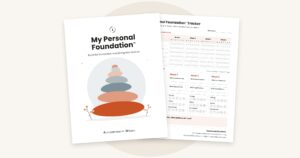
As you probably know, I’m a proponent of tracking. I think it’s a low-cost, high-reward way to build awareness, to create habits, and to sustain boundaries.
In our program your personal foundation is just that—foundational. Most people don’t come to us because they want to take better care of themselves, want more energy, or want to feel more connected to themselves or others. They come to us to grow their businesses, to make more money, and to build systems to scale. Solid, tangible outcomes that require focus and consistency. They come to us for that.
Building a Strong Personal Foundation
However, we give them this option. Do you want to commit to anything under your personal foundation? These are the habits and routines that make you feel your best (energy), connected (to yourself, others, or something bigger), and relieve stress (build resilience). A client might answer, “No, I’m all good there,” but more often than not, they have something in mind that’s been a little bit loud for them but seems completely unrelated to their other goals. I need to drink more water. I need to get outside. I want to take my wife out on a date. It would really help me feel less stressed if I planned my week. I would love to journal again.
And lo and behold, it’s these very practices that sustain the big work they are here to do with us. Change, goals, and living your vision require energy, connection, and resilience. I know this because we reviewed years of data on personal foundations and determined two things: the general categories that people were committing to and the rate at which they accomplished their goals versus people that did not have a personal foundation. We found that a strong personal foundation didn’t just mean people enjoyed our program more; it meant they accomplished more. That’s the opposite of the burnout culture that we are trying to recover from.
Small Habits That Make a Difference
So to that end, I made a simple personal foundation tracker that you can use to see where you are over the next 4 weeks. If you like it, print another copy and continue to use it. Realize that adding in new habits takes time. I tend to avoid idealized “perfect” habits and go for the most impactful with the least amount of effort. We all have busy lives, and making things easy to do is a skill; it’s learning how to set yourself up to be successful.
A client said to me the other day, “I’m realizing that I don’t have to make everything so hard. For some reason, I think if it’s not hard, it’s not valuable, and that’s just not true.” I agree with him. For example, I’d like to drink more water. One Stanley that I fill up and put on my desk in the morning means I drink a lot more than if I didn’t do that. I could commit to finishing it, to drinking a certain number of ounces, but instead the habit is to have water on my desk all day long. If I realize it’s empty and refill it, bonus. If I don’t finish, that’s okay too. Easy.
Here is the link to the tracker; feel free to share it.
When we put our well-being as the foundation of everything else we are creating, we will have built something we can sustain, enjoy, and feel good about.